Monday, April 20, 2026

5 Weird Daily Habits of Ancient Egyptians That Will Surprise You

When we think of Ancient Egypt, we often imagine stern Pharaohs, massive pyramids, and mysterious rituals. However, beneath the golden masks and stone monuments lived a people with a surprising, sophisticated, and sometimes "weird" sense of daily life.

From their obsession with hygiene to their unusual pets, here are five daily habits of the Ancient Egyptians that prove they were much more like us—and yet much more unique—than you ever imagined.

1. They Invented "Hair Gel" (Using Fat!)

Long before modern styling products, Egyptians were obsessed with their hair. Archaeologists have discovered that both men and women used a fatty, wax-like substance to style their hair.

  • The Secret: In the scorching heat of Egypt, this "gel" would keep their elaborate hairstyles and wigs in place. Recent scans of mummies have even found this styling fat still intact after 3,000 years!

2. Cones of Perfumed Wax on Their Heads

If you look closely at ancient banquet scenes, you’ll see guests wearing strange white cones on their heads. These weren't hats; they were scented wax cones made of ox tallow and myrrh.

  • The Reason: As the party went on and the room grew warm, the wax would slowly melt, dripping a fragrant perfume over the wearer’s wig and clothes, keeping them smelling fresh all night long.

3. Makeup was for Men, Women, and Medicine

In Egypt, everyone wore "Kohl" (the dark eyeliner). But it wasn't just for beauty.

  • The Science: Egyptians believed the lead-based eyeliner protected their eyes from the harsh desert sun and acted as a disinfectant to prevent eye infections. It was both a fashion statement and a "medical kit" in a jar.

4. They Shared Their Homes with Cheetahs and Baboons

While we have cats and dogs, the wealthy Egyptians took "pet ownership" to the next level. They kept baboons, monkeys, and even cheetahs as household companions.

  • The Twist: Training a baboon was no easy feat; reliefs show baboons helping with the fruit harvest or even "catching thieves" in the market. However, cats remained the ultimate sacred favorites, with the penalty for harming one being extremely severe.

5. Their "Social Media" was the Walls of Deir el-Medina

The workers who built the Valley of the Kings didn't have Facebook, but they had Ostraca (limestone flakes). They used these to write quick notes, sketches, and even "complaints" about their bosses or their neighbors. We’ve found ancient "sick notes" where workers excused themselves from building pyramids because they were "brewing beer" or "suffering from a scorpion bite."


Why Learning About Their Daily Life Matters

Understanding these habits makes the Ancient Egyptians feel real. They weren't just builders of stone; they were people who loved parties, cared about their looks, and complained about their jobs—just like we do today.

Egypt Lover Tip: When you visit the Cairo Museum, look for the small "cosmetic spoons" and "bronze mirrors." They are a beautiful reminder of the personal care and vanity that have existed for millennia.


References / For Further Reading

  1. Tyldesley, Joyce. Egypt: How a Lost Civilization was Rediscovered. (Provides great context on the social life of the common people.)

  2. Brewer, Douglas J. The Ancient Egyptians: New Perspectives. (Focuses on the ecology and daily biology of Egyptian life.)

  3. Brier, Bob, and Hobbs, Hoyt. Daily Life of the Ancient Egyptians. (The definitive guide to everything from food to fashion in the Nile Valley.)

                                                          www.EGYPTLOVER.COM 
Uploaded Image

Sunday, April 19, 2026

THE QUEENS WHO SHAPED HISTORY

Beyond Hatshepsut: The Forgotten Power of Egypt’s Great Queens

While Queen Hatshepsut is often the most famous female ruler, she was far from the only woman to hold immense power in Ancient Egypt. From diplomatic masterminds to symbols of divine beauty and fierce warriors, these queens were the "Power Behind the Throne"—and sometimes, they were the throne itself.

Here are four remarkable queens who shaped the destiny of the Nile Valley.

1. Queen Tiye: The Diplomatic Powerhouse

  • The Status: The Great Royal Wife of Amenhotep III and mother of Akhenaten.

  • The Secret Power: Tiye was not of royal blood, yet she rose to become one of the most influential women in history. She was the first queen to have her name appear on official acts alongside the king.

  • The Achievement: Foreign kings often wrote directly to her to settle international disputes, recognizing her political genius. She was the grandmother of King Tutankhamun, and her presence was so commanding that she was often depicted as a sphinx—a symbol usually reserved for kings.

2. Queen Nefertiti: The Icon of a Revolution

  • The Status: The Great Royal Wife of Akhenaten.

  • The Secret Power: Her name means "A Beautiful Woman Has Come," but she was much more than a face. Alongside her husband, she led a religious revolution that moved Egypt toward the worship of a single god, the Aten.

  • The Achievement: Nefertiti is shown in reliefs performing tasks only a Pharaoh would do, such as smiting enemies or leading religious ceremonies. Many historians believe she ruled Egypt alone as a Pharaoh after her husband's death under the name Neferneferuaten.

3. Queen Nefertari: The Beloved of the Sun

  • The Status: The favorite wife of Ramses the Great (Ramses II).

  • The Secret Power: While Ramses II was famous for his wars, Nefertari was his most trusted advisor in peace. She was highly educated and could read and write hieroglyphs, a rare skill for a woman at the time.

  • The Achievement: Ramses II built the smaller temple at Abu Simbel specifically for her—the first time in history a Pharaoh dedicated such a massive monument to his wife. Her tomb in the Valley of the Queens (QV66) is considered the "Sistine Chapel of Ancient Egypt" due to its breathtaking colors and artistry.

4. Queen Ahhotep I: The Warrior Queen

  • The Status: Mother of Ahmose I, the founder of the New Kingdom.

  • The Secret Power: During the war to expel the Hyksos invaders from Egypt, Ahhotep took command of the army.

  • The Achievement: She rallied the troops, suppressed rebellions, and secured the borders while her son was still young. When she died, she was buried with the "Golden Flies of Valor"—the highest military decoration in the Egyptian army, proving she was a true general on the battlefield.


Why These Queens Matter

In Ancient Egypt, the concept of "Duality" was essential. For every king, there had to be a queen to maintain Ma'at (universal balance). These women weren't just "wives"; they were co-regents, diplomats, and protectors of the state.

Egypt Lover Tip: When visiting Abu Simbel, look closely at the statues of Nefertari. Usually, queens were depicted only reaching the Pharaoh's knees, but Ramses II ordered her statues to be the same size as his own, showing his ultimate respect for her power.


References / For Further Reading

  1. Tyldesley, Joyce. Chronicle of the Queens of Egypt. (An excellent genealogical and historical overview of Egypt’s female rulers.)

  2. Hawass, Zahi. The Royal Tombs of Egypt. (For a detailed look at the burial sites and artifacts belonging to these powerful women.)

  3. Cooney, Kara. When Women Ruled the World: Six Queens of Egypt. (A deep psychological and political dive into why Egypt turned to women in times of crisis.)

                                                      www.EGYPTLOVER.COM 
Uploaded Image

Saturday, April 18, 2026

MEET THE DIVINE GUARDIANS

Gods of the Nile: Understanding the 5 Most Powerful Deities of Ancient EgyptThe Ancient Egyptian religion was not just a set of beliefs; it was a way of living in harmony with the universe. With a pantheon of over 2,000 gods and goddesses, the Egyptians saw the divine in everything—from the flooding of the Nile to the movements of the stars.

To truly appreciate the temples and tombs of Egypt, one must meet the five "superstars" of the Egyptian pantheon.

1. Ra: The King of the Gods

  • Appearance: Often depicted as a man with a hawk's head topped with a solar disk encircled by a cobra.

  • The Power: Ra was the Sun God and the source of all life. Each day, he sailed across the sky in a golden boat, and each night, he traveled through the underworld to battle the serpent of chaos, Apophis, to ensure the sun would rise again.

  • SEO Tip: For travelers visiting Heliopolis or Karnak, Ra is the central figure to look for.

2. Osiris: Lord of the Afterlife

  • Appearance: A mummified king wearing the white Atef crown, holding a crook and flail.

  • The Story: Osiris was a legendary king of Egypt who was murdered by his brother Seth and resurrected by his wife Isis. He became the judge of the dead, presiding over the "Weighing of the Heart" ceremony.

  • Significance: He represents resurrection and the eternal cycle of the Nile's floods.

3. Isis: The Divine Mother

  • Appearance: A woman wearing a throne-shaped headdress or cow horns with a sun disk.

  • The Power: Isis was the most beloved goddess, known for her magical power and protective nature. She was the ideal mother and wife. Her cult was so powerful that it spread far beyond Egypt, reaching as far as Rome and London.

  • Must-See: Her beautiful temple on Philae Island in Aswan is a testament to her enduring legacy.

4. Horus: The Protector of Pharaohs

  • Appearance: A falcon or a man with a falcon's head.

  • The Connection: The son of Osiris and Isis, Horus fought his uncle Seth to avenge his father and reclaim the throne. Every living Pharaoh was considered the "Living Horus."

  • The Secret: The Eye of Horus (Wedjat) remains one of the world's most famous symbols for protection and healing.

5. Anubis: The Guardian of the Scales

  • Appearance: A black jackal or a man with a jackal’s head.

  • The Role: Anubis was the god of mummification and the guide of souls. The jackal was chosen because these animals were often seen in cemeteries; the Egyptians "tamed" the jackal by making him a protector of the dead rather than a scavenger.


Why Did They Have Animal Heads?

A common question from visitors is: Did Egyptians believe their gods looked like animals? The answer is Symbolism. An animal's head was a "visual shorthand" for the god's character. The falcon represented the sky and keen vision (Horus), while the lioness represented fierce protection (Sekhmet). It was a brilliant way to make abstract divine concepts visible to everyone.


References / For Further Reading

  1. Wilkinson, Richard H. The Complete Gods and Goddesses of Ancient Egypt. (The most visual and comprehensive guide to the entire pantheon.)

  2. Pinch, Geraldine. Egyptian Mythology: A Guide to the Gods, Goddesses, and Traditions of Ancient Egypt. (An excellent resource for the stories and myths behind the deities.)

  3. Assmann, Jan. The Search for God in Ancient Egypt. (For those who want to understand the deep philosophical and theological meaning behind Egyptian polytheism.)

                                               www.EGYPTLOVER.COM 
Uploaded Image

Friday, April 17, 2026

Decoding the Sacred Signs: Secrets of Ancient Egyptian Hieroglyphs

For over 1,500 years, the walls of Egyptian temples spoke a language that no living soul could understand. It wasn't until the discovery of the Rosetta Stone and the genius of Jean-FranΓ§ois Champollion in 1822 that the silent stones of Egypt began to speak again. But what exactly is "Hieroglyphics," and why is it more than just a collection of beautiful pictures?

1. The Triple Nature of the Signs

The biggest secret to understanding Hieroglyphs is knowing that a single sign can function in three different ways. This is what made it so difficult for early scholars to crack the code:

  • Phonograms (Sound signs): Like our alphabet, many signs represent specific sounds. For example, the sign of an owl represents the sound "m".

  • Ideograms (Sense signs): A sign can represent the object it depicts. A drawing of a sun could literally mean "sun" or "day."

  • Determinatives (Clarifiers): These are silent signs placed at the end of a word to show its category. For example, a word followed by a pair of walking legs indicates motion (walking, running, or coming).

2. The Direction of Reading: Follow the Faces

Unlike Arabic (right to left) or English (left to right), Hieroglyphs are flexible. They can be written in almost any direction. The Secret: To know which way to read, you must look at the faces of the humans or animals in the inscriptions. They always face the beginning of the line. If the birds are facing right, you read from right to left.

3. The Magic of the Cartouche

Have you ever noticed names enclosed in an oval loop with a horizontal line at the end? This is called a Cartouche.

  • The Symbolism: The oval represents a rope that encircles the entire universe, symbolizing that the Pharaoh inside the cartouche rules over everything the sun encircles.

  • The Clue: The Cartouche was the key for Champollion; he realized that these loops contained the names of royalty (like Ptolemy and Cleopatra), which helped him identify the phonetic sounds.

4. Artistic Symmetry over Grammar

Ancient Egyptian scribes were artists before they were writers. If a sentence looked "ugly" or unbalanced, they would rearrange the signs to make them aesthetically pleasing. They would group signs into invisible squares to ensure there was no "empty space," a concept known as horror vacui (fear of empty space).

5. The Evolution: From Sacred to Everyday

Hieroglyphs were reserved for monumental stone inscriptions (temples and tombs). For daily business, taxes, and letters, the Egyptians developed faster, "shorthand" versions:

  • Hieratic: A cursive form used by priests.

  • Demotic: The "popular" script used for legal and commercial documents.


How to "Write" Like an Egyptian (Try it Yourself!)

While the full system has over 700 signs, you can start with the basics. The "Alphabet" signs are a great way to engage your readers:

  • A (Vulture)

  • B (Foot)

  • R (Mouth)

  • K (Basket)


References / For Further Reading

  1. Allen, James P. Middle Egyptian: An Introduction to the Language and Culture of Hieroglyphs. (The gold standard for students wanting to learn the grammar.)

  2. Collier, Mark, and Manley, Bill. How to Read Egyptian Hieroglyphs. (A very practical, step-by-step guide for beginners and travelers.)

  3. Robinson, Andrew. Lost Languages: The Enigma of the World's Undeciphered Scripts. (Explores the thrilling story of how Champollion raced against Thomas Young to crack the code.)

                                            www.EGYPTLOVER.COM 
Uploaded Image

Thursday, April 16, 2026

Ancient Egyptian Medicine: Surprising Tools and Divine Treatments

Long before the Greeks and Romans, the physicians of ancient Egypt were legendary throughout the ancient world. Their reputation for medical knowledge was so great that Persian kings and Roman emperors sought their services. The Ancient Egyptian Medicine was a fascinating blend of practical science, advanced surgery, and deep religious magic, creating a healthcare system that was centuries ahead of its time.

The Dual Approach: Magic and Medicine

To the ancient Egyptians, disease was often seen as a spiritual attack by an angry god, a demon, or a deceased person. Therefore, a doctor (Sunu) had to be a master of two arts:

  1. Practical Medicine: Using herbs, minerals, and physical treatments.

  2. Magic and Spells: Using incantations and amulets to drive out the spiritual cause of the illness.

The most famous physician, Imhotep (who lived during the Old Kingdom), was so revered for his skills that he was later deified as the god of medicine.


The Edwin Smith Papyrus: A Manual of Surgery

Our greatest insight into their surgical knowledge comes from the Edwin Smith Papyrus (dating to around 1600 BC). This remarkable document is a purely practical medical textbook, detailing 48 cases of trauma and injuries with unmatched scientific objectivity.

  • Diagnosis and Prognosis: For each case, the physician is instructed to:

    1. Examine the patient.

    2. Make a diagnosis.

    3. Decide on a prognosis: "An ailment which I will treat," "An ailment with which I will contend," or "An ailment not to be treated" (incurable cases).

  • Advanced Procedures: The papyrus describes methods for treating dislocated jaws, setting broken bones with splints, and even stitching wounds—showing a profound understanding of human anatomy gained, in part, from the practice of mummification.


The Pharmacopoeia: Nature’s Pharmacy

The Ebers Papyrus (another major medical text) lists over 800 remedies and recipes. Many of the ingredients they used are still recognized today:

  • Honey: A powerful natural antiseptic used to dress wounds and prevent infection.

  • Garlic and Onion: Used for digestive issues and as a general health tonic.

  • Castor Oil: A well-known laxative.

  • Willow Bark: Contained salicin, a natural precursor to aspirin, used to treat pain and fever.

  • Moldy Bread: Surprisingly used to treat infections—centuries before Alexander Fleming discovered penicillin!

Specialization: The "Shepherds of the Anus"

Ancient Egyptian medicine was highly specialized. According to the Greek historian Herodotus, "The practice of medicine is so divided among them that each physician treats one disease and no more." There were doctors for the eyes (Swnw n jrt), the teeth, and even a specialist called the "Shepherd of the Anus" (Swnw n phwj) who focused on proctology.


References / For Further Reading

  1. Nunn, John F. Ancient Egyptian Medicine. (Dr. Nunn, a retired doctor and Egyptologist, provides the most comprehensive and medically accurate analysis of their practices.)

  2. Allen, James P. The Art of Medicine in Ancient Egypt. (A Metropolitan Museum of Art publication that explores medical papyri and tools.)

  3. Halioua, Bruno, and Ziskind, Bernard. Medicine in the Days of the Pharaohs. (Translated from French, this book offers a detailed look at the daily life and practices of Egyptian doctors.)

                                                          
Uploaded Image

Abu Simbel — Great Temple

Temples.png
Rising from a sandstone cliff above the western bank of Lake Nasser in Egypt's far south, the Great Temple of Abu Simbel is one of the most audacious acts of royal self-promotion ever carved in stone. Commissioned by Pharaoh Ramesses II around 1264 BCE, it was not merely a place of worship — it was a declaration of divine power projected toward Egypt's Nubian frontier and beyond, designed to awe, intimidate, and endure for an eternity. Four colossal seated statues of the pharaoh, each standing 20 metres tall, guard the entrance to a temple that drives 63 metres into the living rock of the cliff.

What makes Abu Simbel uniquely extraordinary is the combination of ambitions its builders achieved simultaneously: a work of breathtaking artistic scale, an astronomical instrument of precise solar engineering, and a political monument calculated to assert Egyptian supremacy over the conquered territories of Nubia. Over three thousand years later, it remains among the most visited and photographed ancient sites on Earth — and its twentieth-century relocation is itself considered one of the greatest engineering feats in modern history.

The Great Temple of Abu Simbel — four colossal seated statues of Ramesses II carved into the sandstone cliff
The Great Temple of Abu Simbel — four 20-metre colossi of Ramesses II carved directly from the sandstone cliff, c. 1264 BCE. © Wikimedia Commons

πŸ“‹ Table of Contents
πŸ›️ Overview & Significance
πŸ“… Historical Timeline
⚙️ Architecture & Layout
☀️

... [Ψ§Ω„Ω…Ψ­ΨͺΩˆΩ‰ Ω…Ω‚Ψ·ΩˆΨΉ]

King Huni

1A Network of Provincial Pyramids

While Huni is less famous than his successor Sneferu, he was a prolific builder. He is credited with constructing a series of **seven small step pyramids** (known as "minor step pyramids") scattered throughout the provinces of Egypt, from the Delta to Elephantine.

2The Fortress of Elephantine

Huni recognized the strategic importance of the southern border. He built a massive fortress on the island of Elephantine (modern Aswan) to secure Egypt against Nubian incursions and to control the trade of gold and exotic goods flowing from the south.

3The Meidum Pyramid Mystery

The Pyramid of Meidum is an architectural enigma. It began as a step pyramid and was later converted into the first "true" smooth-sided pyramid.

4Family and Succession

Huni's wife was likely Queen Meresankh I. While he had no surviving son to inherit the throne directly, his daughter, Hetepheres I, married Sneferu (who may have been Huni's stepson or son by a lesser wife). This marriage secured the royal bloodline and launched the glorious Fourth Dynasty.

5Wisdom Literature: The Instruction of Kagemni

Huni is mentioned in the famous literary work "The Instruction of Kagemni." The text describes him as a king who died in peace after a long and prosperous reign, passing the torch to the "beneficent king" Sneferu. This portrays Huni as a wise and stable ruler who left the country in excellent condition.

Wednesday, April 15, 2026

Secrets of Mummification: The Ancient Egyptian Quest for Immortality

To the ancient Egyptians, death was not the end, but a gateway to a second life. To ensure the soul (Ka) could recognize its body and live forever in the "Field of Reeds," the body had to remain intact. This belief gave birth to Mummification, the most sophisticated preservation process in human history.

Even with modern technology, the precision and chemical mastery of the ancient embalmers continue to baffle scientists and doctors today.

The 70-Day Ritual: More Than Just Anatomy

Mummification was a sacred art that took exactly 70 days. It wasn't just a medical procedure; it was a religious ceremony led by a priest wearing the mask of Anubis, the god of embalming.

1. The Purification

The process began at the "Ibu" (The Place of Purification), where the body was washed with water from the Nile and palm wine.

2. The Internal Alchemy

  • The Brain: Embalmers used a special hooked instrument to remove the brain through the nostrils—a feat of delicate surgery.

  • The Organs: The stomach, intestines, lungs, and liver were removed and preserved in four Canopic Jars, each protected by one of the four sons of Horus.

  • The Heart: Unlike other organs, the heart was left inside the body. Egyptians believed it was the seat of intelligence and would be weighed against the feather of truth in the afterlife.

Natron: The Secret Ingredient

The most critical step was dehydration. The body was packed in Natron, a natural salt found in the Wadi Natrun valley. This salt acted as a powerful desiccant, absorbing all moisture and stopping decay without making the body brittle.

The Wrapping and Amulets

Once dried, the body was wrapped in hundreds of yards of fine linen. Between the layers, priests placed Amulets (like the Scarab or the Ankh) to provide magical protection. A funerary mask—the most famous being Tutankhamun’s gold mask—was placed over the head to ensure the spirit could recognize its face.

Beyond the Pharaohs: Mummification for All?

While the "Elite Package" involved expensive oils and spices like myrrh and cassia, mummification was available in different "price tiers." Even animals—cats, ibises, and crocodiles—were mummified in the millions as offerings to the gods, showing how deeply this practice was woven into the fabric of society.

References / For Further Reading

1.     Ikram, Salima. Death and Burial in Ancient Egypt. (An essential guide by one of the world's leading experts on animal mummies.)

2.     Taylor, John H. Death and the Afterlife in Ancient Egypt. (A British Museum publication detailing the spiritual and physical aspects of the process.)

3.     Brier, Bob. Egyptian Mummies: Unraveling the Secrets of an Ancient Art. (Dr. Bob Brier, known as "Mr. Mummy," provides a fascinating look at the chemistry and history of embalming.)                

www.EGYPTLOVER.COM


Uploaded Image

King Sneferu

1Sneferu the Benevolent, Founder of a Golden Age

Sneferu, whose name means "He has Perfected," founded the glorious Fourth Dynasty and ruled for approximately 24 years. Unlike his son Khufu, who was often depicted in later folklore as a tyrant, Sneferu was remembered for millennia as a good, just, and accessible king. The Westcar Papyrus, a collection of stories written long after his death, portrays him as an affable ruler who addressed commoners as "my brother."

But his kindness was matched by a formidable will. He inherited a stable kingdom from his father Huni and used its full might to embark on an unparalleled building spree, moving more stone than any other ruler in Egyptian history—surpassing even Khufu. His reign was not just about building tombs; it was about perfecting them, a relentless pursuit that laid the foundation for the wonders of Giza.

2The Pyramid Trilogy: An Epic of Engineering

Sneferu’s architectural legacy is a dramatic three-act play of failure, crisis, and ultimate triumph, resulting in the birth of the true pyramid.

3Folklore: The King and the Turquoise Pendant

4Powering the State: Conquest and Commerce

These colossal building projects required immense resources, and Sneferu was a master of state-level logistics and foreign policy. The Palermo Stone, an ancient royal annal, records the activities that funded his ambitions:

5The Royal Family: A Glimpse into Luxury

Sneferu's principal wife was **Queen Hetepheres I**, mother of Khufu. Her secret tomb cache at Giza revealed the incredible artistry of Sneferu's court. It contained gilded furniture, a portable canopy, and silver bracelets inlaid with butterfly designs in turquoise, lapis lazuli, and carnelian. These treasures prove the extreme wealth and artistic sophistication that defined his golden age.

6Legacy: The Father of the Pyramid Age

Sneferu's legacy is the Giza Plateau itself. Without his trials at Meidum and Dahshur, the Great Pyramid would not exist. By the end of his reign, he had perfected the engineering, logistics, and state organization needed to build mountains of stone. He left his son Khufu a wealthy, stable nation and the blueprint for immortality.

Art of the Era: The famous "Meidum Geese" frieze, found in the mastaba of his son Nefermaat, dates to this period. Its incredible realism and color make it one of the masterpieces of ancient Egyptian art.

King Djoser

1The Dawn of a New Age

King Djoser (known in his time as Netjerikhet) inherited a newly reunified and stable Egypt from his father, Khasekhemwy. This peace and prosperity enabled him to launch a project that would fundamentally alter the course of human history and define the identity of ancient Egypt forever. His reign marks the definitive end of the Early Dynastic Period and the glorious beginning of the **Old Kingdom**, an era of unparalleled architectural and cultural achievement.

2The Step Pyramid: A Revolution in Stone

At Saqqara, overlooking the capital of Memphis, Djoser commissioned his vizier, Imhotep, to build his eternal resting place. What began as a simple, square mastaba tomb—similar to those of earlier kings—evolved into something the world had never seen.

3Imhotep: The Genius Behind the Throne

The story of Djoser's achievement is inseparable from that of his chief minister, Imhotep. A man of seemingly limitless talent, his influence was so profound that Djoser honored him with an inscription on his own statue—an unprecedented tribute.

4The Legend of the Famine Stele

A story carved two thousand years after his death, the "Famine Stele" on Sehel Island near Aswan, illustrates Djoser's enduring legacy as a pious and wise king. According to the legend, Egypt suffered a devastating seven-year famine where the Nile failed to flood.

In desperation, Djoser sought the counsel of Imhotep, who discovered that the source of the Nile was controlled by the ram-headed god **Khnum** at Elephantine. Djoser made a pilgrimage south, restored Khnum's temple, and made lavish offerings. Pleased, the god appeared to the king in a dream and promised to release the waters. The famine ended, and Djoser's reputation as a king who could intercede with the gods was cemented for all time.

5Securing the Kingdom

While famed for his building project, Djoser also ensured Egypt's security and economic prosperity. His reign saw military expeditions into the Sinai Peninsula to subdue local tribes and secure the region's valuable mines of copper and turquoise—minerals essential for the tools and decorations of his new stone age. This military control guaranteed the flow of resources needed for his ambitious architectural vision.

6Legacy: Architect of an Age

Djoser's contemporary Horus name, **Netjerikhet ("Divine of Body")**, was a powerful declaration of his status as a living god on Earth. The Step Pyramid was the ultimate expression of this divinity—a monument that elevated the king above all mortals and physically connected him to the celestial realm.

Uploaded Image

Khasekhemwy

1Civil War and Reunification

Khasekhemwy ascended the throne at a time of intense internal conflict. The Second Dynasty appears to have been plagued by a civil war between the north and south, possibly symbolized by the divine struggle between the gods Horus (of the south) and Seth (of the north).

Inscriptions on statues he dedicated at Hierakonpolis record a brutal victory over northern rebels, listing over 47,000 casualties. After crushing the rebellion, he did something remarkable: instead of punishing his enemies, he sought to heal the nation.

He changed his name from Khasekhem ("The Power Appears") to Khasekhemwy ("The Two Powers Appear") and placed the symbol of the god Seth alongside Horus atop his royal serekh. This was a masterstroke of political and religious diplomacy, declaring that both factions were now reconciled and united under his rule.

2The Bridge to the Old Kingdom

Khasekhemwy is one of the most pivotal figures in Egyptian history because he stands at the crossroads of two great eras. He is the last king of the Early Dynastic Period and the direct father of the king who would launch the Old Kingdom.

  • Dynastic Link: His wife, Queen Nimaathap, is referred to in later texts as the "Mother of the King's Children," and their son was none other than Djoser, the builder of the first pyramid.
  • Era of Stability: By ending the civil war and reunifying the country, Khasekhemwy created the peace and prosperity necessary for his son to launch the massive state projects that would define the Pyramid Age.
  • Final King of an Era: His death and burial at Abydos mark the definitive end of the Early Dynastic Period. With his son Djoser, a new era of monumental stone architecture would begin.

3Architectural Pioneer

Khasekhemwy's building projects were the direct inspiration for the pyramids. He experimented with monumental construction on a scale never before seen.

  • Shunet el-Zebib: At Abydos, he built a massive mudbrick funerary enclosure with walls over 10 meters high. This structure is the world's oldest-surviving mudbrick building of its size and served as a direct model for the enclosure wall of Djoser's Step Pyramid complex.
  • Tomb V at Abydos: His tomb was revolutionary. It was the first to have a burial chamber built entirely of dressed limestone blocks, a huge leap in technology from the mudbrick and wood of his predecessors.
  • Early Stone Construction: The use of limestone in his tomb demonstrated that Egyptian builders had mastered the quarrying, transportation, and construction of stone on a large scale. It was the final step needed before the construction of a full pyramid was possible.

4Legacy: The Father of the Pyramid Age

While Djoser and his architect Imhotep are famous for building the first pyramid, their achievement would have been impossible without the foundation laid by Khasekhemwy.

By reunifying the nation, creating political stability, and pioneering monumental construction in both mudbrick and stone, Khasekhemwy provided his son with the security, wealth, and technical knowledge to begin the most ambitious building program in human history. He is not just the last king of one era, but the true father of the next.
Uploaded Image

King Hotepsekhemwy

1The Name: "The Two Powers are Reconciled"

Hotepsekhemwy's name is one of the most politically charged in Egyptian history. It translates literally to "The Two Powers are at Peace" or "Pleasing the Two Powers."

Who are the Two Powers? They likely refer to the rival gods Horus (patron of Lower Egypt/Order) and Seth (patron of Upper Egypt/Chaos). The end of the First Dynasty was marked by dynastic strife and perhaps a religious civil war. By choosing this name, Hotepsekhemwy declared his program: to unify the opposing factions and restore Ma'at (balance) to the realm.

2Connection to the First Dynasty

Although he founded a new dynasty, Hotepsekhemwy ensured legitimacy by honoring his predecessors. Archaeological evidence confirms he was responsible for the burial of King Qaa, the last king of the First Dynasty.

  • Seal Impressions: Seals bearing Hotepsekhemwy's name were found inside Qaa's tomb at Abydos. In ancient Egypt, the one who buries the king is the legitimate heir.
  • Dynastic Marriage: He likely married a princess from the First Dynasty bloodline to cement his claim to the throne.

3The Shift to Saqqara

One of the most significant changes during Hotepsekhemwy's reign was the move of the royal necropolis. While the First Dynasty kings were all buried at the ancestral cemetery of Abydos, Hotepsekhemwy chose a new location: Saqqara, the necropolis overlooking the capital of Memphis.

The "Gallery Tomb": His tomb (Substructure A) is not a simple pit but a massive, labyrinthine network of underground galleries carved deep into the bedrock. It spans over 120 meters in length and includes dozens of storage magazines, showcasing a leap in architectural ambition and engineering capability.

4Events & Legends

Little is known of the specific events of his reign (estimated at 25-29 years), but historical fragments provide glimpses:

  • The Earthquake: The historian Manetho (writing in the Greek period) records that during the reign of "Boethos" (the Greek name for Hotepsekhemwy), a great chasm opened in the earth at Bubastis in the Delta, and many people perished.
  • Stone Vessels: Thousands of stone vessels bearing his name were found beneath the Step Pyramid of Djoser, suggesting his tomb was later raided or his goods were reused by later kings.

5Succession: Raneb

Hotepsekhemwy was succeeded by Raneb (also read as Nebra), whose name means "Ra is the Lord" or "Lord of the Sun." This is the first time the sun god Ra appears in a royal name, marking the beginning of the rise of solar theology that would dominate the Old Kingdom.

Uploaded Image

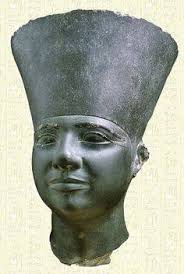
Userkaf

The First Solar King of the Old Kingdom

π“…±π“Šƒπ“‚‹π“Ž‘π“†‘
(Wsr-k3-f)

πŸ•°️ Reign
c. 2494–2487 BC

⚔️ Feat
Solar Theology

πŸͺ¨ Monument
Sun Temple

πŸ›️ Burial
Saqqara

01
Basic Identity
Userkaf is recognized as the pivotal first king of the Fifth Dynasty, initiating a new era in Egyptian history focused on the sun god Ra.

Name Meaning “Powerful is his Ka”
Titles King of Upper & Lower Egypt, Son of Ra
Dynasty Fifth Dynasty (Old Kingdom)
Reign c. 2494–2487 BCE (Approx. 7 Years)
02
A New Era
Userkaf's reign marks a significant dynastic transition from the monumental builders of the Fourth Dynasty (Giza) to the theological rulers of the Fifth. It represents a shift from purely physical royal power (huge pyramids) to religious legitimacy, centering on the Solar Kingship tradition.

03
Origins & Family
Ancient sources are ambiguous about his exact parentage. He may have been the son of a royal woman (Neferhetepes) related to the Fourth Dynasty kings, or possibly connected to the powerful Priesthood of Ra in Heliopolis (as suggested by the Westcar Papyrus legend). His rise represents ideological continuity rather than a violent coup.

04
Son of Ra
Userkaf revolutionized Egyptian religion by elevating Ra to the status of supreme state god. He was the first to prominently use the title "Son of Ra" as a core part of the royal titulary, forever linking the pharaoh's biological nature to the sun god. This empowered the Heliopolitan priesthood significantly.

5. The Sun Temple (Nekhen-Re)
Located at Abu Ghurab, Userkaf built the first known Sun Temple, named Nekhen-Re ("The Stronghold of Ra"). Unlike traditional temples, this was an open-air complex featuring a massive, squat obelisk (Benben) on a podium. It was designed to welcome sunlight directly, symbolizing the presence of the god without the need for a statue.

06
The Ruined Pyramid
Userkaf built his pyramid at Saqqara, close to the Step Pyramid of Djoser. Named Wab-Isut-Userkaf ("Pure are the Places of Userkaf"), it was much smaller than the Giza pyramids (only 49m high). The core was built of rough masonry and rubble, encased in fine limestone. This faster but less durable construction method led to its current ruined state.

07
Refined Artistry
Despite smaller monuments, the artistic quality of his reign was superb. Fragments of reliefs found at his temples display refined craftsmanship, focusing on detailed religious scenes and the natural world (birds, marshes) rather than just monumental displays of power.

08
Temple Economy
Userkaf began a trend of granting significant power and land endowments to religious institutions, particularly the temples of Ra. While this stimulated local economies and temple estates, it also laid the groundwork for the decentralization of the Old Kingdom, as priests gained independence from the crown.

09
Trade & Stability
His reign was largely peace-oriented, focused on internal stability and religion. However, trade continued with Nubia (for stone and gold) and the Levant (for timber), maintaining Egypt's economic networks. A vessel bearing his name was found on the island of Kythera, suggesting far-reaching trade connections.

10
Historical Legacy
Userkaf's greatest legacy is the Fifth Dynasty Ideology: kings who were smaller builders but greater theologians. He shifted the focus from the King as a god to the King as the servant and son of Ra. His introduction of the Sun Temple set a precedent followed by his successors for generations.

πŸ“Œ Comprehensive Summary
πŸ‘‘ Name: Userkaf (Powerful is his Ka)

πŸ•°️ Era: 5th Dynasty (Old Kingdom)

⚔️ Key Achievement: First Sun Temple & Rise of Ra

πŸͺ¨ Monument: Pyramid at Saqqara

[ءورة Ψ§Ω„Ω…Ω‚Ψ§Ω„]: https://i.postimg.cc/sg55CPFx/Userkaf.jpg

Tuesday, April 14, 2026

King Hor-Aha

Introduction: The Second Pharaoh

While Narmer is credited with the violent unification of Upper and Lower Egypt, his successor, Hor-Aha (c. 3100 BCE), faced the monumental task of turning a conquest into a functioning nation. His name means "Horus the Fighter," reflecting the ongoing military struggles to maintain order. Yet, he is also known as "The Founder" because he established the administrative capital of Memphis, which would serve as the heart of Egypt for millennia.

πŸ›️

1. The Founding of Memphis (Ineb-Hedj)

Hor-Aha's greatest strategic achievement was founding the city of Memphis (originally known as *Ineb-Hedj*, "The White Wall").

Why Memphis?

He chose a location at the exact apex of the Nile Delta, where the valley meets the sea. This allowed him to control both the agricultural wealth of the Delta and the trade routes of the Upper Nile simultaneously. Legend says he diverted the course of the Nile to create dry land for the city.

⚔️

2. The Fighter King: Military Campaigns

Peace was not immediate. Hor-Aha led campaigns to suppress rebellions in Nubia (Ta-Sety) to the south, ensuring access to gold and trade routes. An ebony label found in Abydos depicts the "Smiting of the Nubians," confirming his military activity. He also secured the eastern borders in the Sinai.

⚰️

3. The Royal Tomb at Abydos (B19)

Hor-Aha was buried in the ancestral cemetery of Umm el-Qaab at Abydos. His tomb complex consists of three large chambers (B10, B15, B19). It is significantly larger than Narmer's, reflecting the growing wealth of the state.

Human Sacrifice

Grim evidence from his tomb complex reveals the practice of retainer sacrifice. Dozens of young servants and lions were killed and buried around him to serve him in the afterlife. This brutal practice demonstrated the absolute power of the early kings but was abandoned by the end of the First Dynasty in favor of shabti figures.

πŸ‘Έ

4. Queens and Dynastic Marriage

To cement the union of the Two Lands, Hor-Aha likely married Neithhotep, a princess from the north (Lower Egypt), though she may also have been his mother. His primary wife was likely Benerib, whose name means "Sweet of Heart" and who was buried near him at Abydos.

πŸ“œ

5. The Mystery of Menes

Ancient historians like Manetho speak of a king named Menes who founded the First Dynasty. Egyptologists have long debated whether Menes was Narmer or Hor-Aha. The prevailing theory is that "Menes" is a title or a composite figure representing the acts of both kings, but the construction of Memphis is most strongly linked to Hor-Aha.

Uploaded Image

King Den

1The First "King of Upper and Lower Egypt"

While his predecessors ruled a unified territory, Den's reign marks a major ideological leap. He was the **first ruler to be documented using the title "nsw-bity"**, which translates to "King of Upper and Lower Egypt."

This was more than just a name; it was a profound statement of purpose. The title, symbolized by the sedge (for Upper Egypt) and the bee (for Lower Egypt), declared the king as the single, divinely ordained ruler of the Two Lands, maintaining cosmic balance (Ma'at) through his dual role. This titulary became the defining feature of Egyptian kingship for the next 3,000 years.

2A Golden Age of Innovation

Den's long and prosperous reign is considered one of the high points of the First Dynasty, marked by significant advances in architecture, administration, and art. Later Egyptians looked back on his era as a golden age.

  • Mature Administration: Seal impressions from his reign reveal a complex and well-organized bureaucracy with specialized officials for taxation, agriculture, and resource management.
  • Military Strength: His Horus name, "Horus Who Strikes," is backed by evidence from ivory labels depicting successful military campaigns to protect Egypt's borders and trade routes, particularly in the east (Sinai).
  • Artistic Development: Artifacts from his reign, especially the detailed narrative scenes on ivory labels, show a new level of artistic sophistication and the beginnings of recorded history.

3The MacGregor Label: The Smiter of the East

One of the most famous artifacts from the First Dynasty is the MacGregor Label, an ivory tag found in Den's tomb. It depicts the king in the classic "smiting the enemy" pose, a motif that would be used by every subsequent pharaoh to symbolize order conquering chaos.

The label bears the inscription: "The First Time of Striking the East." This confirms that Den led a major military campaign into the Sinai Peninsula or the Eastern Desert, likely to secure turquoise mines and trade routes. It is the first recorded instance of this specific "smiting" iconography being used with a historical narrative.

4The Regency of Queen Merneith

Den ascended to the throne as a child. For the early part of his reign, his mother, the powerful Queen Merneith, ruled on his behalf as regent.

Merneith's influence was so immense that she was granted her own royal tomb at Abydos (Tomb Y), built on a scale that rivaled the tombs of the kings themselves. This indicates that she was not just a queen consort, but a ruler in her own right. She is the first female ruler of Egypt known by name.

5The Heb-Sed Festival: A Long Reign

Archaeological evidence, including stone vessels and labels, confirms that King Den celebrated a Heb-Sed (Jubilee) festival. This ritual was traditionally held after a king had ruled for 30 years to rejuvenate his power and reaffirm his divine right to rule.

The fact that Den celebrated this festival suggests his reign was exceptionally long, likely exceeding 40 years. Scenes from his time show him running the ritual race around the boundary markers, proving his physical fitness to continue leading Egypt.

6Tomb T: A New Standard in Royal Burials

Den's tomb at Abydos (Tomb T) was a marvel of its time and set a new standard for royal funerary architecture.

  • The First Royal Stairway: His tomb was the first to feature a grand entrance stairway, allowing the entire structure to be completed before the king's death. This innovation was adopted by all subsequent pharaohs, including in the pyramids.
  • Use of Granite: The burial chamber itself featured a floor paved with red and black granite from Aswan. This is one of the earliest examples of massive stone blocks being transported and used in a monumental construction project.
  • Retainer Burials: The tomb was surrounded by the subsidiary graves of over 130 retainers, sacrificed to accompany their king into the afterlife, reinforcing the immense divine authority he commanded.

7Legacy of a Great King

Den's reign was a pivotal moment. He didn't just rule Egypt; he defined what it meant to be its king. His administrative systems, royal titles, and architectural innovations became the bedrock of Pharaonic civilization.

His legacy is defined by:

  • Formalizing Dual Kingship: Establishing the "nsw-bity" title that all future pharaohs would adopt.
  • Architectural Blueprint: Introducing the stairway tomb design and the large-scale use of stone in royal monuments.
  • Creating a Golden Age: His stable and prosperous reign was remembered for millennia as a period of great achievement and a model for future kings.
Uploaded Image

5 Weird Daily Habits of Ancient Egyptians That Will Surprise You

When we think of Ancient Egypt, we often imagine stern Pharaohs, massive pyramids, and mysterious rituals. However, beneath the golden mas...