Wednesday, April 15, 2026

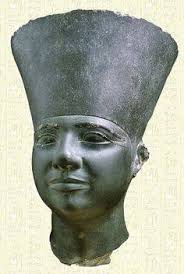
King Hotepsekhemwy

1The Name: "The Two Powers are Reconciled"

Hotepsekhemwy's name is one of the most politically charged in Egyptian history. It translates literally to "The Two Powers are at Peace" or "Pleasing the Two Powers."

Who are the Two Powers? They likely refer to the rival gods Horus (patron of Lower Egypt/Order) and Seth (patron of Upper Egypt/Chaos). The end of the First Dynasty was marked by dynastic strife and perhaps a religious civil war. By choosing this name, Hotepsekhemwy declared his program: to unify the opposing factions and restore Ma'at (balance) to the realm.

2Connection to the First Dynasty

Although he founded a new dynasty, Hotepsekhemwy ensured legitimacy by honoring his predecessors. Archaeological evidence confirms he was responsible for the burial of King Qaa, the last king of the First Dynasty.

  • Seal Impressions: Seals bearing Hotepsekhemwy's name were found inside Qaa's tomb at Abydos. In ancient Egypt, the one who buries the king is the legitimate heir.
  • Dynastic Marriage: He likely married a princess from the First Dynasty bloodline to cement his claim to the throne.

3The Shift to Saqqara

One of the most significant changes during Hotepsekhemwy's reign was the move of the royal necropolis. While the First Dynasty kings were all buried at the ancestral cemetery of Abydos, Hotepsekhemwy chose a new location: Saqqara, the necropolis overlooking the capital of Memphis.

The "Gallery Tomb": His tomb (Substructure A) is not a simple pit but a massive, labyrinthine network of underground galleries carved deep into the bedrock. It spans over 120 meters in length and includes dozens of storage magazines, showcasing a leap in architectural ambition and engineering capability.

4Events & Legends

Little is known of the specific events of his reign (estimated at 25-29 years), but historical fragments provide glimpses:

  • The Earthquake: The historian Manetho (writing in the Greek period) records that during the reign of "Boethos" (the Greek name for Hotepsekhemwy), a great chasm opened in the earth at Bubastis in the Delta, and many people perished.
  • Stone Vessels: Thousands of stone vessels bearing his name were found beneath the Step Pyramid of Djoser, suggesting his tomb was later raided or his goods were reused by later kings.

5Succession: Raneb

Hotepsekhemwy was succeeded by Raneb (also read as Nebra), whose name means "Ra is the Lord" or "Lord of the Sun." This is the first time the sun god Ra appears in a royal name, marking the beginning of the rise of solar theology that would dominate the Old Kingdom.

Uploaded Image

Userkaf

The First Solar King of the Old Kingdom

ð“…ąð“Šƒð“‚‹ð“ŽĄð“†‘
(Wsr-k3-f)

🕰️ Reign
c. 2494–2487 BC

⚔️ Feat
Solar Theology

ðŸŠĻ Monument
Sun Temple

🏛️ Burial
Saqqara

01
Basic Identity
Userkaf is recognized as the pivotal first king of the Fifth Dynasty, initiating a new era in Egyptian history focused on the sun god Ra.

Name Meaning “Powerful is his Ka”
Titles King of Upper & Lower Egypt, Son of Ra
Dynasty Fifth Dynasty (Old Kingdom)
Reign c. 2494–2487 BCE (Approx. 7 Years)
02
A New Era
Userkaf's reign marks a significant dynastic transition from the monumental builders of the Fourth Dynasty (Giza) to the theological rulers of the Fifth. It represents a shift from purely physical royal power (huge pyramids) to religious legitimacy, centering on the Solar Kingship tradition.

03
Origins & Family
Ancient sources are ambiguous about his exact parentage. He may have been the son of a royal woman (Neferhetepes) related to the Fourth Dynasty kings, or possibly connected to the powerful Priesthood of Ra in Heliopolis (as suggested by the Westcar Papyrus legend). His rise represents ideological continuity rather than a violent coup.

04
Son of Ra
Userkaf revolutionized Egyptian religion by elevating Ra to the status of supreme state god. He was the first to prominently use the title "Son of Ra" as a core part of the royal titulary, forever linking the pharaoh's biological nature to the sun god. This empowered the Heliopolitan priesthood significantly.

5. The Sun Temple (Nekhen-Re)
Located at Abu Ghurab, Userkaf built the first known Sun Temple, named Nekhen-Re ("The Stronghold of Ra"). Unlike traditional temples, this was an open-air complex featuring a massive, squat obelisk (Benben) on a podium. It was designed to welcome sunlight directly, symbolizing the presence of the god without the need for a statue.

06
The Ruined Pyramid
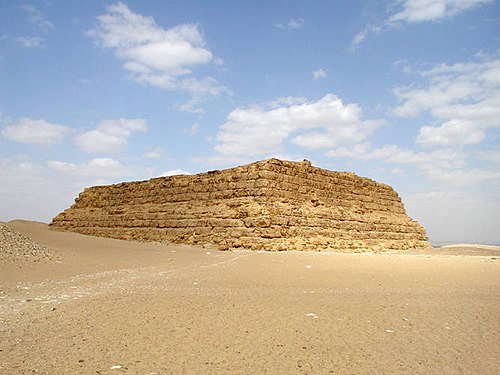
Userkaf built his pyramid at Saqqara, close to the Step Pyramid of Djoser. Named Wab-Isut-Userkaf ("Pure are the Places of Userkaf"), it was much smaller than the Giza pyramids (only 49m high). The core was built of rough masonry and rubble, encased in fine limestone. This faster but less durable construction method led to its current ruined state.

07
Refined Artistry
Despite smaller monuments, the artistic quality of his reign was superb. Fragments of reliefs found at his temples display refined craftsmanship, focusing on detailed religious scenes and the natural world (birds, marshes) rather than just monumental displays of power.

08
Temple Economy
Userkaf began a trend of granting significant power and land endowments to religious institutions, particularly the temples of Ra. While this stimulated local economies and temple estates, it also laid the groundwork for the decentralization of the Old Kingdom, as priests gained independence from the crown.

09
Trade & Stability
His reign was largely peace-oriented, focused on internal stability and religion. However, trade continued with Nubia (for stone and gold) and the Levant (for timber), maintaining Egypt's economic networks. A vessel bearing his name was found on the island of Kythera, suggesting far-reaching trade connections.

10
Historical Legacy
Userkaf's greatest legacy is the Fifth Dynasty Ideology: kings who were smaller builders but greater theologians. He shifted the focus from the King as a god to the King as the servant and son of Ra. His introduction of the Sun Temple set a precedent followed by his successors for generations.

📌 Comprehensive Summary
👑 Name: Userkaf (Powerful is his Ka)

🕰️ Era: 5th Dynasty (Old Kingdom)

⚔️ Key Achievement: First Sun Temple & Rise of Ra

ðŸŠĻ Monument: Pyramid at Saqqara

[ØĩŲˆØąØĐ Ø§Ų„Ų…Ų‚Ø§Ų„]: https://i.postimg.cc/sg55CPFx/Userkaf.jpg

Tuesday, April 14, 2026

King Hor-Aha

Introduction: The Second Pharaoh

While Narmer is credited with the violent unification of Upper and Lower Egypt, his successor, Hor-Aha (c. 3100 BCE), faced the monumental task of turning a conquest into a functioning nation. His name means "Horus the Fighter," reflecting the ongoing military struggles to maintain order. Yet, he is also known as "The Founder" because he established the administrative capital of Memphis, which would serve as the heart of Egypt for millennia.

🏛️

1. The Founding of Memphis (Ineb-Hedj)

Hor-Aha's greatest strategic achievement was founding the city of Memphis (originally known as *Ineb-Hedj*, "The White Wall").

Why Memphis?

He chose a location at the exact apex of the Nile Delta, where the valley meets the sea. This allowed him to control both the agricultural wealth of the Delta and the trade routes of the Upper Nile simultaneously. Legend says he diverted the course of the Nile to create dry land for the city.

⚔️

2. The Fighter King: Military Campaigns

Peace was not immediate. Hor-Aha led campaigns to suppress rebellions in Nubia (Ta-Sety) to the south, ensuring access to gold and trade routes. An ebony label found in Abydos depicts the "Smiting of the Nubians," confirming his military activity. He also secured the eastern borders in the Sinai.

⚰️

3. The Royal Tomb at Abydos (B19)

Hor-Aha was buried in the ancestral cemetery of Umm el-Qaab at Abydos. His tomb complex consists of three large chambers (B10, B15, B19). It is significantly larger than Narmer's, reflecting the growing wealth of the state.

Human Sacrifice

Grim evidence from his tomb complex reveals the practice of retainer sacrifice. Dozens of young servants and lions were killed and buried around him to serve him in the afterlife. This brutal practice demonstrated the absolute power of the early kings but was abandoned by the end of the First Dynasty in favor of shabti figures.

ðŸ‘ļ

4. Queens and Dynastic Marriage

To cement the union of the Two Lands, Hor-Aha likely married Neithhotep, a princess from the north (Lower Egypt), though she may also have been his mother. His primary wife was likely Benerib, whose name means "Sweet of Heart" and who was buried near him at Abydos.

📜

5. The Mystery of Menes

Ancient historians like Manetho speak of a king named Menes who founded the First Dynasty. Egyptologists have long debated whether Menes was Narmer or Hor-Aha. The prevailing theory is that "Menes" is a title or a composite figure representing the acts of both kings, but the construction of Memphis is most strongly linked to Hor-Aha.

Uploaded Image

King Den

1The First "King of Upper and Lower Egypt"

While his predecessors ruled a unified territory, Den's reign marks a major ideological leap. He was the **first ruler to be documented using the title "nsw-bity"**, which translates to "King of Upper and Lower Egypt."

This was more than just a name; it was a profound statement of purpose. The title, symbolized by the sedge (for Upper Egypt) and the bee (for Lower Egypt), declared the king as the single, divinely ordained ruler of the Two Lands, maintaining cosmic balance (Ma'at) through his dual role. This titulary became the defining feature of Egyptian kingship for the next 3,000 years.

2A Golden Age of Innovation

Den's long and prosperous reign is considered one of the high points of the First Dynasty, marked by significant advances in architecture, administration, and art. Later Egyptians looked back on his era as a golden age.

  • Mature Administration: Seal impressions from his reign reveal a complex and well-organized bureaucracy with specialized officials for taxation, agriculture, and resource management.
  • Military Strength: His Horus name, "Horus Who Strikes," is backed by evidence from ivory labels depicting successful military campaigns to protect Egypt's borders and trade routes, particularly in the east (Sinai).
  • Artistic Development: Artifacts from his reign, especially the detailed narrative scenes on ivory labels, show a new level of artistic sophistication and the beginnings of recorded history.

3The MacGregor Label: The Smiter of the East

One of the most famous artifacts from the First Dynasty is the MacGregor Label, an ivory tag found in Den's tomb. It depicts the king in the classic "smiting the enemy" pose, a motif that would be used by every subsequent pharaoh to symbolize order conquering chaos.

The label bears the inscription: "The First Time of Striking the East." This confirms that Den led a major military campaign into the Sinai Peninsula or the Eastern Desert, likely to secure turquoise mines and trade routes. It is the first recorded instance of this specific "smiting" iconography being used with a historical narrative.

4The Regency of Queen Merneith

Den ascended to the throne as a child. For the early part of his reign, his mother, the powerful Queen Merneith, ruled on his behalf as regent.

Merneith's influence was so immense that she was granted her own royal tomb at Abydos (Tomb Y), built on a scale that rivaled the tombs of the kings themselves. This indicates that she was not just a queen consort, but a ruler in her own right. She is the first female ruler of Egypt known by name.

5The Heb-Sed Festival: A Long Reign

Archaeological evidence, including stone vessels and labels, confirms that King Den celebrated a Heb-Sed (Jubilee) festival. This ritual was traditionally held after a king had ruled for 30 years to rejuvenate his power and reaffirm his divine right to rule.

The fact that Den celebrated this festival suggests his reign was exceptionally long, likely exceeding 40 years. Scenes from his time show him running the ritual race around the boundary markers, proving his physical fitness to continue leading Egypt.

6Tomb T: A New Standard in Royal Burials

Den's tomb at Abydos (Tomb T) was a marvel of its time and set a new standard for royal funerary architecture.

  • The First Royal Stairway: His tomb was the first to feature a grand entrance stairway, allowing the entire structure to be completed before the king's death. This innovation was adopted by all subsequent pharaohs, including in the pyramids.
  • Use of Granite: The burial chamber itself featured a floor paved with red and black granite from Aswan. This is one of the earliest examples of massive stone blocks being transported and used in a monumental construction project.
  • Retainer Burials: The tomb was surrounded by the subsidiary graves of over 130 retainers, sacrificed to accompany their king into the afterlife, reinforcing the immense divine authority he commanded.

7Legacy of a Great King

Den's reign was a pivotal moment. He didn't just rule Egypt; he defined what it meant to be its king. His administrative systems, royal titles, and architectural innovations became the bedrock of Pharaonic civilization.

His legacy is defined by:

  • Formalizing Dual Kingship: Establishing the "nsw-bity" title that all future pharaohs would adopt.
  • Architectural Blueprint: Introducing the stairway tomb design and the large-scale use of stone in royal monuments.
  • Creating a Golden Age: His stable and prosperous reign was remembered for millennia as a period of great achievement and a model for future kings.
Uploaded Image

King Djer

1Identity & Names

Djer is one of the best-attested kings of the First Dynasty, with his name appearing on numerous artifacts from Abydos, Saqqara, and even outside of Egypt.


  • Horus Name: áļĪr-áļŽr (Hor-Djer), meaning "Horus the Strong" or "Horus Who Endures," reflecting the stability and longevity of his reign.
  • Greek Tradition: He is possibly the king remembered as Uenephes in the later king-lists of Manetho.
  • Family: He was the son and successor of Hor-Aha. His mother is often identified as Khenthap.

2Chronology & Historical Importance

Djer's long reign (estimated at over 40 years) was a period of peace, stability, and significant economic growth. Following the unification by Narmer and consolidation by Hor-Aha, Djer's era was focused on building Egypt's wealth and international influence.

  • Reign: Approximately 3000 BCE.
  • Dynasty: First Dynasty, Early Dynastic Period.
  • Key Contribution: His reign marks the transformation of Egypt into a major regional economic power through the establishment of long-distance trade.

3Trade Expansion & Foreign Relations

Under Djer, Egypt's foreign contact expanded significantly, moving from tentative contact to established trade networks that brought immense wealth into the kingdom.

  • Trade with the Levant: Egyptian pottery and artifacts from Djer's reign have been found in southern Canaan (modern-day Israel and Palestine). In return, Egypt imported valuable timber (like cedar), olive oil, and other luxury goods.
  • Expeditions to Sinai: Inscriptions record expeditions to the Sinai Peninsula to secure valuable resources like copper and turquoise, essential for crafting tools, jewelry, and ceremonial objects.
  • Influence in Nubia: A rock inscription near Wadi Halfa (far south in Nubia) bears the name of Djer, proving Egyptian expeditions reached deep into Africa to control trade routes for gold and exotic goods.
This trade was not merely commercial; it was a tool of the state, likely managed by royal officials to fund the court, administrative projects, and grand burials.

4King Djer the Physician

The historian Manetho, writing thousands of years later, attributes a surprising skill to King Djer (whom he calls Athothis). He states that the king was a physician and that books on anatomy were written by him.

While no specific medical papyrus has been found directly authored by Djer, this tradition highlights the high esteem in which early kings were held regarding wisdom and knowledge. It suggests that during his reign, significant advancements in medicine and the understanding of the human body were made, possibly linked to the practices of mummification.

5Tomb, Burial, and Royal Jewelry

Djer's tomb at Umm el-Qaab, Abydos (Tomb O) is a powerful statement of his wealth and authority. It is one of the most significant tombs of the First Dynasty.

  • The Tomb of Osiris: Thousands of years later, in the Middle Kingdom, Egyptians believed Djer's tomb was the actual burial place of the god Osiris. It became one of the most sacred pilgrimage sites in all of Egypt.
  • Mass Retainer Sacrifice: Surrounding his tomb are the graves of over 300 courtiers and servants who were sacrificed to serve the king in the afterlife. This is the largest-known retainer sacrifice in Egyptian history.

The Jewelry of Djer

During the excavation of his tomb by Flinders Petrie, a mummified arm was discovered hidden in a wall crevice, likely belonging to a queen or a member of the royal family. On this arm were found four exquisite bracelets made of gold, turquoise, lapis lazuli, and amethyst.

These bracelets are among the oldest and finest examples of royal jewelry ever found. They demonstrate the incredible skill of First Dynasty goldsmiths and the wealth of the court, utilizing materials imported from Sinai and the Eastern Desert.

6Queen Herneith

Herneith was a prominent queen during the reign of Djer, possibly his wife. Her tomb at Saqqara (S3507) is significant for its size and architectural complexity, suggesting she held high status, perhaps even ruling as a regent or partner.

Her name honors the goddess Neith, a warlike deity from the Delta, indicating the continued importance of political alliances between Upper and Lower Egypt.

7Legacy & Historical Significance

Djer is remembered not as a conqueror, but as an empire-builder in the economic sense. He laid the material foundations for the future glory of Egypt.

His reign is significant for:

  • Economic Foundation: Establishing the trade networks that would fuel Egypt's economy for millennia.
  • Strengthening the State: Using the profits of trade to fund a more complex administration and grander royal projects.
  • Cultural Influence: The artifacts from his reign, especially the jewelry, show a marked increase in artistic sophistication and craftsmanship.
Uploaded Image

Menkaure

The king who chose perfection over size, builder of the Third Giza Pyramid.

ð“ ð“ˆ–ð“†‘ð“‚‹ð“…ąð“‚‹ð“‚
(Men-Kau-Ra: "Eternal are the Souls of Ra")

🕰️ Reign
c. 2530–2500 BCE

🏆 Monument
The Third Pyramid

📍 Location
Giza Plateau

👑 Father
Khafre

1
The Divine Pyramid: "Netjer-Menkaure"
Menkaure's pyramid, named "Netjer-Menkaure" (Menkaure is Divine), stands as a testament to the shift in royal ideology during the 4th Dynasty. Though significantly smaller than the pyramids of his father Khafre and grandfather Khufu (standing at 65 meters or 213 ft), it is widely considered the most beautiful in terms of craftsmanship and material value.

The Red Granite Casing: Unlike his predecessors who used fine white limestone for the entire casing, Menkaure opted for a much harder and more expensive material for the bottom 16 courses: Red Aswan Granite. This stone had to be quarried and transported over 900 km down the Nile from Aswan, making the effort per block significantly higher than local limestone. This gave the pyramid a unique, two-toned appearance: red at the base and white limestone at the top.
The Complex Interior: The substructure of Menkaure's pyramid is more complex than Khafre's. It features a descending passage, a panelled chamber, and a burial chamber lined entirely with granite. The arched ceiling of the burial chamber was carved on the underside to resemble a barrel vault, a sophisticated architectural feature.
Unfinished State: The granite casing was never fully smoothed, For More information visit us to  https://egyptlover.com/Menkaure

Shepseskaf

The king who rejected the pyramid and closed an age.

𓊊ð“‹īð“‹ī𓂓𓆑
(Shepseskaf, "His Ka is Noble")

🕰️ Reign
c. 2503–2498 BCE

🏆 Monument
The Mastabat al-Fir'aun

📍 Location
South Saqqara

👑 Father
Menkaure

1
The Great Refusal: Abandoning the Pyramid
Shepseskaf, the last king of the mighty Fourth Dynasty, came to the throne after a century of unprecedented architectural achievement at Giza. The world expected him to build a fourth pyramid. He did not. In a shocking break with the tradition established by his father, grandfather, and great-grandfather, Shepseskaf abandoned Giza and its solar-stairway monuments entirely. He returned to Saqqara, the necropolis of the old kings, and built a tomb that was a deliberate and powerful rejection of the immediate past.

This decision has led to one of the great debates in Egyptology:

Was it an Economic Crisis? Did the colossal pyramid projects of Sneferu, Khufu, and Khafre finally bankrupt the state, leaving Shepseskaf unable to afford another?
Was it a Religious Rebellion? Was this a theological power struggle? By rejecting the pyramid—the ultimate symbol of the solar cult—was Shepseskaf attempting to curb the growing power of the priesthood of Ra at Heliopolis?
The truth is likely a combination of both. His reign marks a clear turning point, away from the absolute focus on the king's solar destiny and towards a new balance of power.

2
The "Pharaoh's Bench": A Return to the Archaic
Shepseskaf chose to build his tomb not as a pyramid, but as a massive mastaba, the largest ever constructed for a king. Known today as the **Mastabat al-Fir'aun** ("Bench of the Pharaoh"), its design is a deliberate throwback to the tombs of the earliest dynasties.

The structure is not a pyramid but a giant, house-like rectangular building, shaped to resemble a huge sarcophagus or perhaps the archaic shrine of Lower Egypt. By adopting this ancient form, Shepseskaf was making a powerful ideological statement. He may have been emphasizing a return to the earthly foundations of kingship rather than the celestial aspirations of the pyramid builders. His very name, **"His Ka is Noble,"** focuses on the king's innate, earthly spirit (Ka) rather than his connection to the sun god Ra.
3
The End of a Dynasty and the Rise of the Sun Temples
Shepseskaf's reign was short, lasting only about four or five years. Before his death, he completed his father Menkaure's pyramid complex, but tellingly, he did so using mudbrick rather than the expensive granite his father had favored. This is another strong indicator of a shift in royal resources and priorities.

Shepseskaf's death marked the end of the direct male line of Sneferu's family. The throne passed to a new family, beginning with **Userkaf**, the founder of the Fifth Dynasty. It is believed that Shepseskaf's sister or wife, **Queen Khentkaus I**, may have played a crucial role in this transition, acting as a regent and legitimizing the new dynasty. With Userkaf, the solar cult that Shepseskaf may have resisted returned with a vengeance. The Fifth Dynasty kings abandoned giant pyramids and instead focused their wealth on building elaborate **Sun Temples** dedicated to Ra, confirming that the ideological struggles of Shepseskaf's reign had reshaped Egyptian religion for good.

4
Legacy: The King Who Closed an Age
Shepseskaf is a fascinating and enigmatic figure. He was the bookend to a spectacular era. His reign demonstrates that history is not a straight line of progress. He inherited the pinnacle of architectural knowledge and chose not to use it. Whether this was a choice born of piety, poverty, or politics, its effect was final.

He was the last king of the Fourth Dynasty, the last to be buried in a monument of such a colossal scale (even as a mastaba), and the last to hold the kind of absolute, centralized power that made the Giza pyramids possible. His reign is the definitive end of the golden age of pyramid building, a final, fascinating chapter in the story of Egypt's most iconic monuments.

[ØĩŲˆØąØĐ Ø§Ų„Ų…Ų‚Ø§Ų„]: https://i.postimg.cc/q7V3J3Lf/Shepseskaf.jpg

Naunet: The Hidden Goddess of the Primeval Waters

  SEO Metadata Focus Keyword: Naunet Egyptian goddess Meta Title: Naunet: The Feminine Waters of Egyptian Mythology Explained Meta Desc...